
Tires & Wheels

Professional Tire & Wheel Services for Safer, Smoother Driving

Your tires are the only part of your vehicle that touches the road. They affect braking, handling, fuel efficiency, ride comfort, and overall safety. At Valvoline Express Care Scarborough, we help keep your tires and wheels in proper condition with tire inspections, pressure checks, rotations, balancing, flat tire support, seasonal tire changes, and honest recommendations.

The Service

What Are Tires & Wheels Services?

Tires and wheels play a major role in how your vehicle performs every day. Good tires help your vehicle grip the road, stop safely, handle properly, and drive smoothly. Wheels support the tires and help maintain stability, balance, and safe contact with the road.

A tire and wheel service is designed to check the condition of your tires, identify wear or damage, maintain proper pressure, improve tire life, and help prevent unexpected problems on the road.

At Valvoline Express Care Scarborough, our tire and wheel services focus on practical maintenance, safety, and prevention. Whether you need a tire inspection, seasonal tire change, tire rotation, tire balancing, or help with a flat tire, our team helps you understand what your vehicle needs.

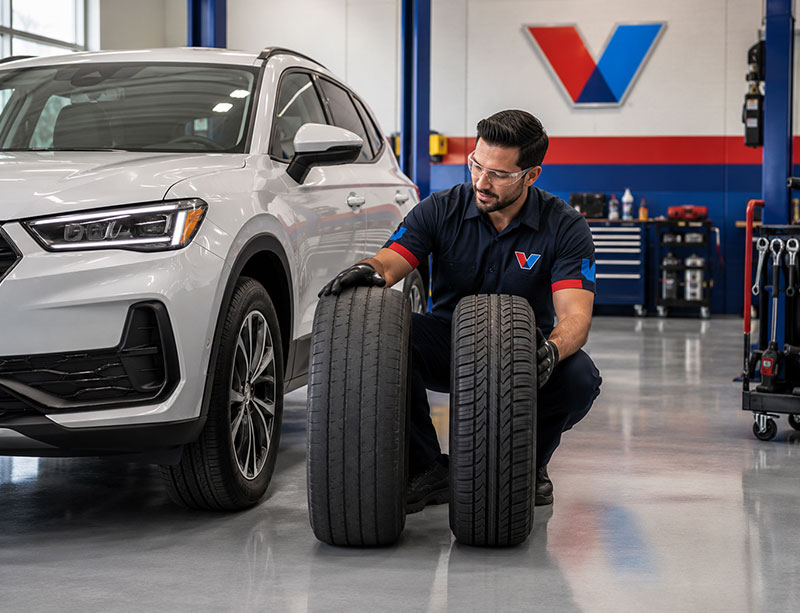
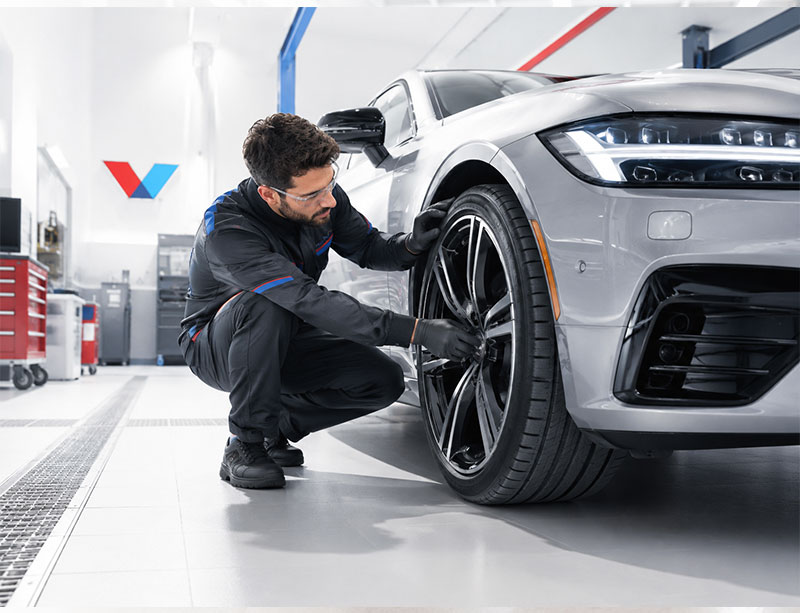
Tire and wheel service
Tire tread and grip
Why It Matters

Why Tires & Wheels Matter

Your tires affect almost every part of the driving experience. Even if your engine and brakes are working properly, worn or poorly maintained tires can reduce safety and performance.

Proper tire and wheel care can help:
  • Improve braking performance
  • Support safer handling
  • Reduce the risk of tire failure
  • Extend tire life
  • Improve fuel efficiency
  • Reduce vibration while driving
  • Improve ride comfort
  • Support better traction in rain, snow, and ice
  • Reduce uneven tire wear
  • Help prevent roadside emergencies

Tires should not be ignored until they are completely worn out. Regular inspection and maintenance help identify problems early.

What We Cover

Services Included Under Tires & Wheels

Tire inspection

1. Tire Inspection

A tire inspection helps determine whether your tires are safe, properly inflated, evenly worn, and free from visible damage. We look for low tread depth, uneven wear, cracks, bulges, punctures, exposed cords, sidewall damage, and improper tire pressure.

Signs you may need one
  • Tires look worn or uneven
  • Vehicle pulls to one side
  • Steering wheel vibrates
  • Tire pressure warning light is on
  • Thumping or unusual road noise
  • Visible nail or puncture
  • Sidewall appears cracked or bulged
  • Vehicle slips in rain or snow
  • Tires are several years old
  • You are planning a long trip

Customer benefit: A tire inspection gives you a clearer understanding of your tire condition and helps you avoid unsafe driving situations.
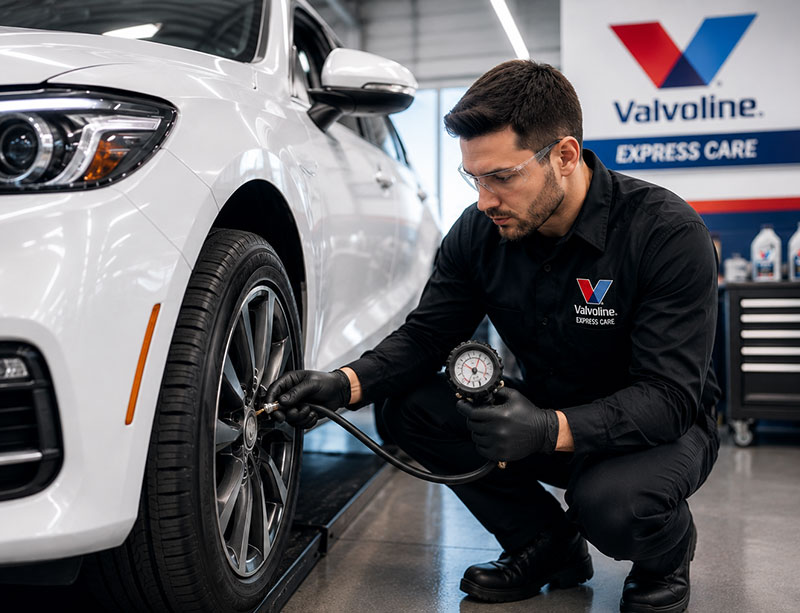
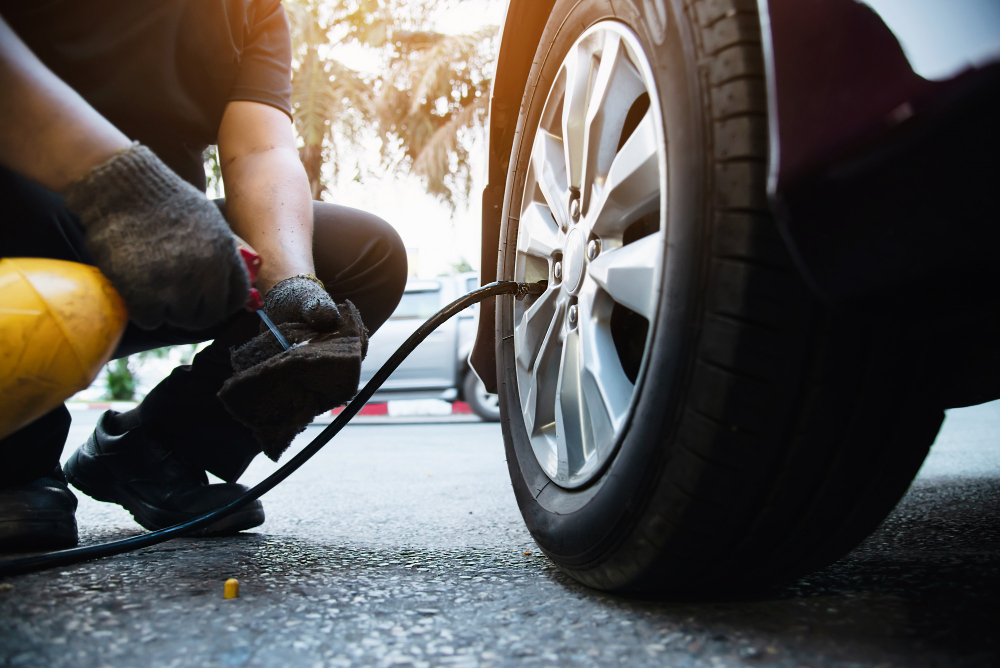
Tire pressure check

2. Tire Pressure Check

Tires naturally lose air over time, and pressure changes with temperature. We check your tire pressure and adjust it to your vehicle’s recommended specifications.

Problems caused by low pressure
  • Poor fuel economy
  • Uneven tire wear
  • Reduced handling
  • Longer stopping distance
  • Increased risk of tire damage
  • Tire overheating
  • TPMS warning light
Problems caused by high pressure
  • Rough ride
  • Reduced traction
  • Increased centre tread wear
  • Less stable handling
  • Higher risk of impact damage

Customer benefit: Keeping your tires properly inflated is one of the easiest ways to improve safety, reduce wear, and support better fuel efficiency.

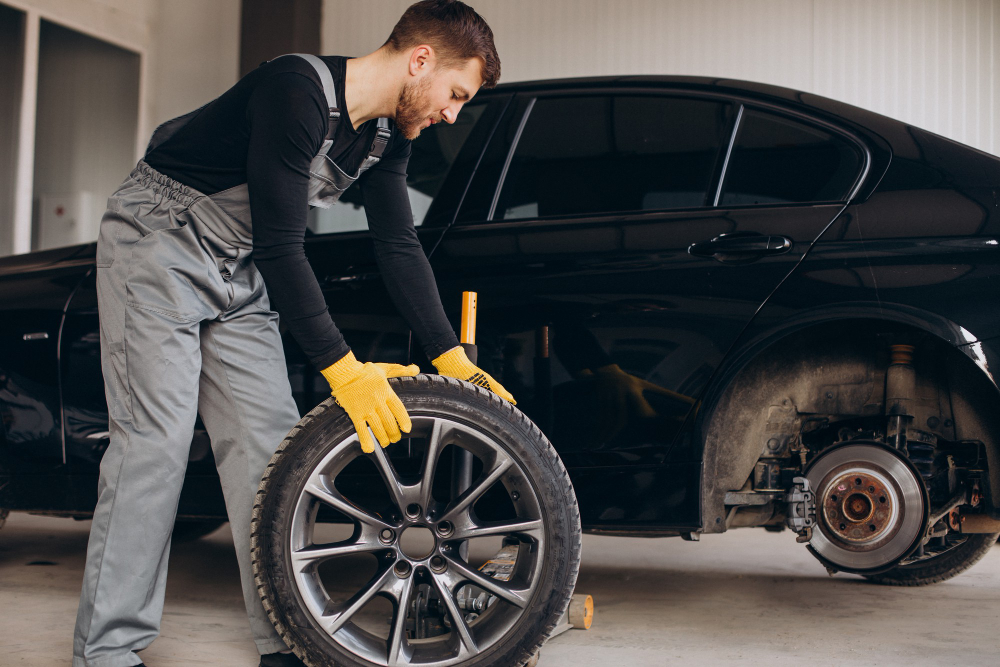
Tire rotation

3. Tire Rotation

Tire rotation means moving the tires from one position on the vehicle to another. Front tires often wear faster because they handle steering and a large portion of braking force, so rotation helps promote more even wear across all four tires.

Benefits of tire rotation
  • Helps extend tire life
  • Promotes even tread wear
  • Improves handling
  • Supports better traction
  • Helps reduce vibration
  • Helps protect your tire investment
  • Supports manufacturer maintenance requirements

How often: Intervals vary by vehicle, tire type, and driving habits. Many drivers rotate during oil changes — your owner’s manual is the best guide.

Tire balancing

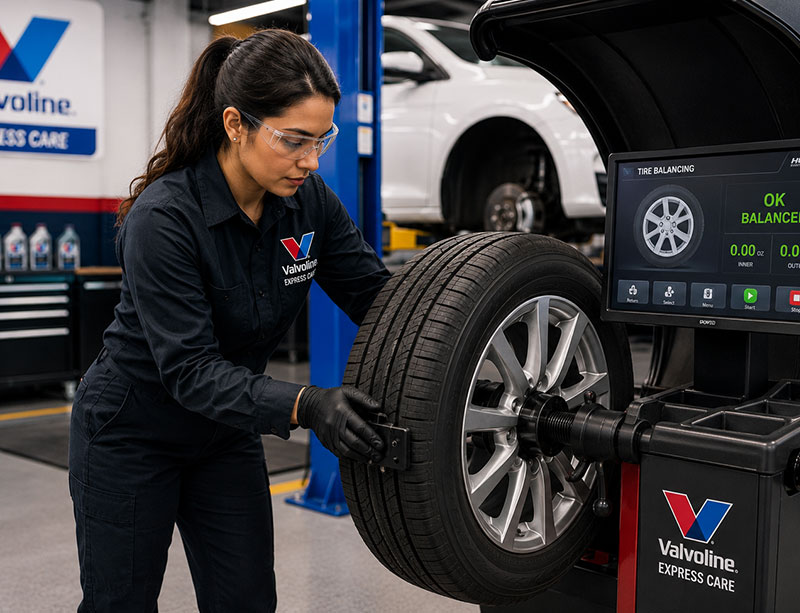
4. Tire Balancing

Tire balancing helps ensure the weight of the tire and wheel assembly is evenly distributed. Small weights are added where needed to correct uneven weight distribution.

Signs your tires may need balancing
  • Steering wheel vibration
  • Vibration at highway speeds
  • Uneven tire wear
  • Bumpy or rough ride
  • Tires were recently installed
  • Tire repair was recently completed
  • Wheel weights are missing
  • Vehicle feels less smooth than usual

Customer benefit: Proper tire balancing helps your vehicle drive more smoothly, improves comfort, and helps protect tires from uneven wear.

Flat tire repair

5. Flat Tire Repair

Nails, screws, sharp objects, valve stem issues, rim leaks, or tire damage can all cause air loss. We inspect the tire to determine whether it can be safely repaired — a tire may be repairable if the puncture is small and located in the proper tread area.

A tire may not be repairable if
  • The sidewall is damaged
  • The puncture is too large
  • The tire was driven on while flat
  • There is internal damage
  • The tread is too worn
  • There are multiple punctures too close together
  • The tire has a bulge or exposed cords

Customer benefit: Flat tire inspection helps you avoid unsafe repairs and gives you the right recommendation for your safety.

Seasonal tire change

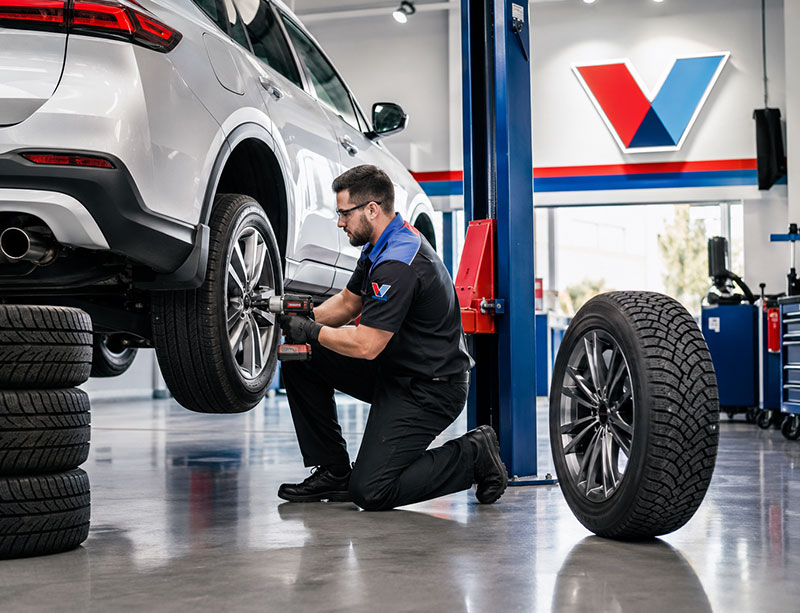
6. Seasonal Tire Change

In Canada, seasonal tire changes are an important part of vehicle safety. A seasonal tire change helps ensure your vehicle has the right tires for the weather.

Tire types
  • Winter tires — better traction in cold, snow, slush, and ice, using compounds that stay flexible in colder weather
  • All-season tires — designed for a variety of conditions, but may not perform as well as winter tires in snow and ice
  • Summer tires — for warmer weather and dry or wet road performance, not intended for winter driving

When to change: A common guideline is to install winter tires when temperatures consistently drop near 7°C and switch back when they consistently rise above that range.

Tire replacement guidance

7. Tire Replacement Guidance

Eventually, every tire needs replacement. We inspect your tires and help you understand whether they are still safe or should be replaced.

Common reasons tires need replacement
  • Low tread depth
  • Uneven wear
  • Sidewall cracks
  • Bulges
  • Repeated air loss
  • Tire age
  • Puncture that cannot be repaired
  • Poor traction
  • Exposed cords
  • Vibration or noise caused by tire damage
What to consider when choosing new tires
  • Vehicle type
  • Driving habits
  • Weather conditions
  • Tire size
  • Load rating
  • Speed rating
  • Winter, all-season, or summer use
  • Budget
  • Brand preference
  • Manufacturer recommendations

Customer benefit: Tire replacement guidance helps you make an informed decision instead of guessing which tires are right for your vehicle.

Wheel inspection

8. Wheel Inspection

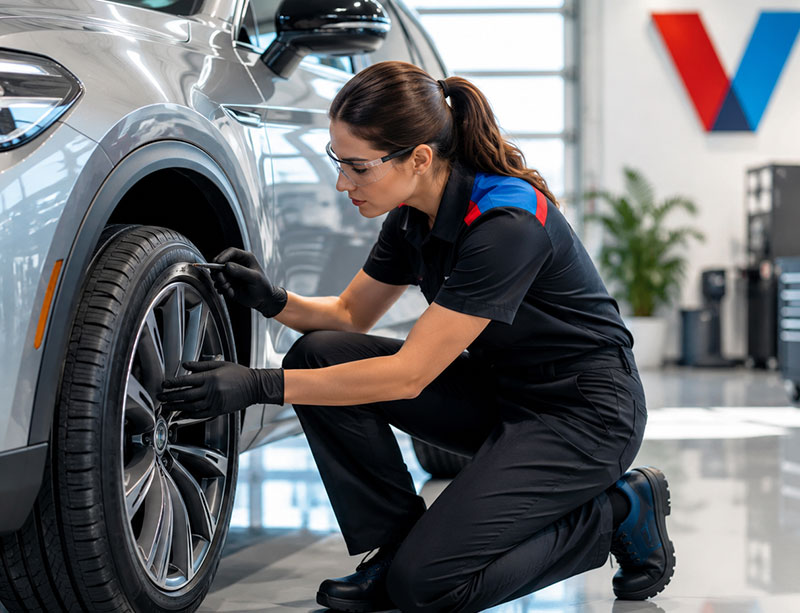
Wheels support your tires and help maintain proper contact with the road. A wheel inspection helps identify visible damage, bends, cracks, corrosion, or problems around the rim area.

Common wheel issues
  • Bent rims
  • Cracked wheels
  • Corrosion around the bead area
  • Air leaks
  • Missing valve caps
  • Damaged valve stems
  • Wheel vibration
  • Curb impact damage

Customer benefit: A wheel inspection helps identify issues that may affect tire pressure, ride comfort, and driving safety.

TPMS warning light review

9. TPMS Warning Light Review

Many vehicles have a Tire Pressure Monitoring System. If your TPMS light is on, it may mean one or more tires are underinflated, or that the system itself needs attention.

Common reasons the light comes on
  • Low tire pressure
  • Cold weather pressure drop
  • Slow tire leak
  • Recent tire change
  • Damaged sensor
  • Sensor battery issue
  • Incorrect tire pressure
  • Spare tire sensor issue on some vehicles

Customer benefit: A TPMS review helps determine whether the warning light is related to air pressure, a tire leak, or a sensor concern.

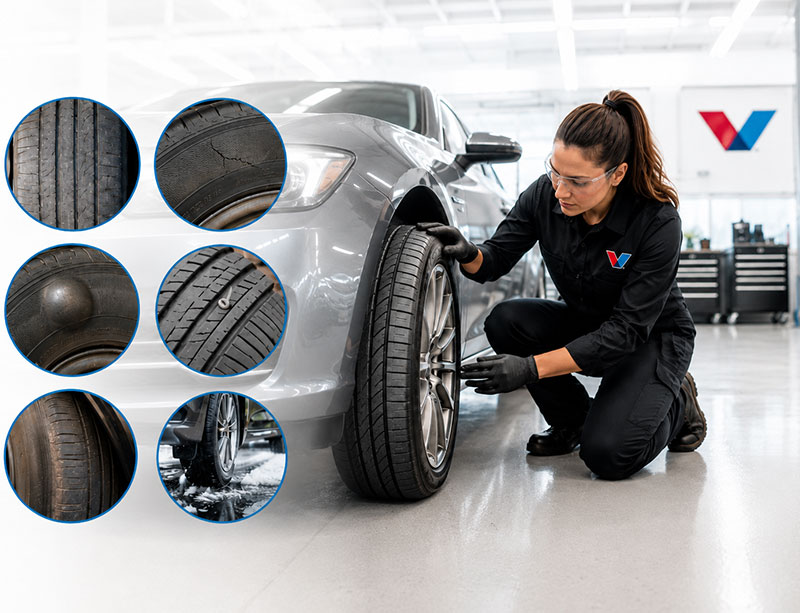
Read the Tread

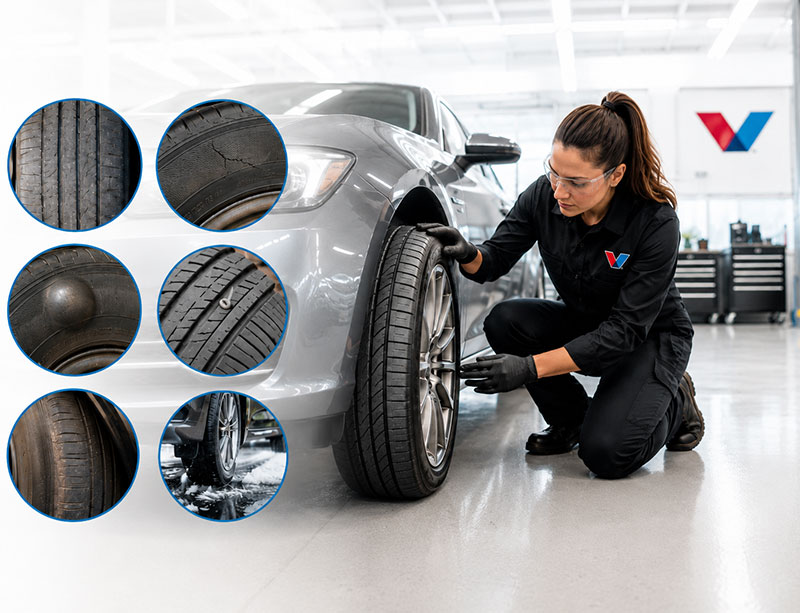
Common Tire Wear Patterns and What They May Mean

A tire inspection can help identify the wear pattern and recommend the next step.

Tire tread wear inspection

If the centre of the tire is more worn than the edges, the tire may have been overinflated.

If both outer edges are worn, the tire may have been underinflated.

If one side of the tire is more worn, it may indicate alignment or suspension concerns.

Uneven dips around the tire may point to suspension wear, imbalance, or other mechanical issues.

Irregular wear may be caused by balancing issues, tire damage, or suspension concerns.

Warning Signs

Signs You May Need Tires & Wheels Service

You should schedule tire and wheel service if you notice any of the following.

  • Tire pressure light on
  • Vehicle pulling to one side
  • Steering wheel vibration
  • Uneven tire wear
  • Tires losing air
  • Cracks or bulges on the tire
  • Low tread depth
  • Thumping noise while driving
  • Poor traction in rain or snow
  • Longer stopping distance
  • Vehicle feels unstable
  • You hit a pothole or curb
  • You are switching between winter and all-season tires
  • Tires are older or high mileage
  • You are preparing for a long drive
Related Systems

Tires, Wheels, Alignment, and Suspension

Tires and wheels work closely with your suspension and steering systems. If your tires are wearing unevenly or your vehicle pulls to one side, the issue may not be the tires alone.

Possible related causes include:
  • Wheel alignment concerns
  • Worn suspension components
  • Worn shocks or struts
  • Bent wheel
  • Tire imbalance
  • Incorrect tire pressure
  • Steering system concerns

A tire inspection can help determine whether additional service may be needed.

Tires, wheels, alignment, and suspension inspection
The Ripple Effect

How Tires Affect the Way You Drive

How tires affect fuel efficiency

How Tires Affect Fuel Efficiency

Underinflated tires create more rolling resistance, meaning the engine has to work harder to move the vehicle. Proper pressure, rotation, balancing, and maintenance can help support better fuel economy.

How tires affect braking

How Tires Affect Braking

Your brakes may be in good condition, but your tires still need enough tread and traction to stop safely. Worn tires can increase stopping distance, especially on wet, snowy, or icy roads.

How tires affect ride comfort

How Tires Affect Ride Comfort

Tire imbalance, uneven wear, damaged tires, or bent wheels can all affect ride comfort. Proper tire and wheel service helps create a smoother and quieter driving experience.

Local Conditions

Tire Safety in Scarborough and GTA Driving Conditions

Driving in Scarborough and the Greater Toronto Area can be demanding on tires. These conditions can affect tire pressure, tread wear, wheel condition, and overall vehicle safety, so regular tire checks are especially important in Canadian driving conditions.

Vehicles often deal with:
  • Stop-and-go traffic
  • Potholes
  • Winter snow and ice
  • Road salt
  • Slush
  • Heavy rain
  • Construction zones
  • Temperature changes
  • Highway driving
  • Short trips and daily commuting
What We Do

What Is Included in Our Tires & Wheels Service?

At Valvoline Express Care Scarborough, tire and wheel services may include:

Tire Condition Inspection

We check tread, wear patterns, visible damage, and general tire condition.

Tire Pressure Check

We check and adjust tire pressure according to your vehicle’s recommended specifications.

Tire Rotation

We rotate tires where appropriate to help promote even wear.

Tire Balancing

We balance tire and wheel assemblies to help reduce vibration and improve ride smoothness.

Flat Tire Inspection & Repair Guidance

We inspect damaged tires to determine whether repair is possible or replacement is needed.

Seasonal Tire Change

We help switch between winter, all-season, or summer tires based on the season.

Wheel Condition Review

We check visible wheel concerns that may affect safety, pressure, or ride quality.

TPMS Light Review

We help review tire pressure warning light concerns and identify possible causes.

Honest Recommendations

We explain your tire condition clearly and recommend only what makes sense for your vehicle.

How It Works

Our Tires & Wheels Service Process

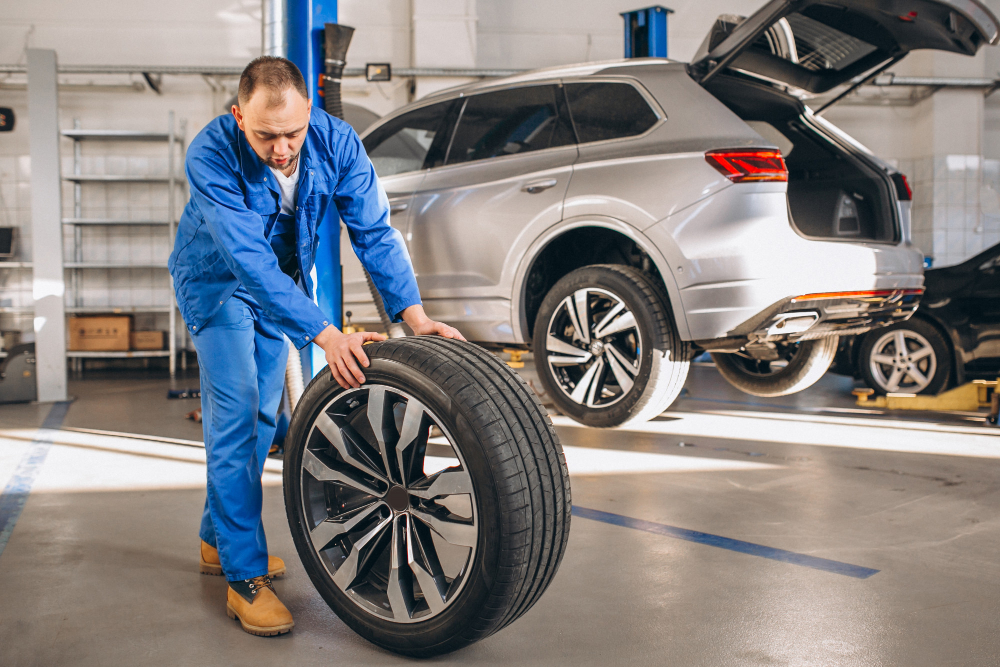
Tire service in the bay

We confirm your vehicle details and ask about tire concerns such as vibration, air loss, tire noise, pulling, or seasonal tire needs.

We inspect visible tire condition, tread wear, sidewalls, and damage.

We check tire pressure and adjust it based on manufacturer recommendations.

We explain whether your tires need rotation, balancing, repair, replacement, or seasonal change.

If approved, we complete the required tire and wheel service.

We confirm the completed service and explain any additional recommendations.

Driver Tips

Tire Maintenance Tips for Drivers

To keep your tires in better condition:

  • Check tire pressure regularly
  • Rotate tires based on recommended intervals
  • Inspect tread depth
  • Watch for uneven wear
  • Avoid driving on underinflated tires
  • Do not ignore vibration
  • Replace tires when tread is too low
  • Use winter tires in cold and snowy conditions
  • Avoid potholes when possible
  • Have tires checked after hitting a curb or pothole
  • Store seasonal tires properly
  • Check tires before long trips
Routine tire maintenance
Local & Trusted

Why Choose Valvoline Express Care Scarborough for Tires & Wheels?

Valvoline Express Care service bay

Safety-Focused Service

We help identify tire concerns that may affect braking, handling, and traction.

Clear Explanations

We explain your tire condition in simple language so you understand what is needed.

Convenient Maintenance

Tire checks and rotations can often be completed during routine vehicle maintenance.

Honest Recommendations

If your tires are still in good condition, we tell you. If they need service, we explain why.

Local Driving Knowledge

We understand the tire needs of drivers in Scarborough, Toronto, and surrounding areas.

FAQ

Frequently Asked Questions

If your tires are still in good condition, we tell you. If they need service, we explain why.

Still have a question?

Our team is here to help you keep your vehicle running smoothly.

Contact Now

You may need replacement if the tread is low, the tires are cracked, there are bulges, cords are exposed, or the tires no longer provide safe traction.

Tire pressure should be checked regularly, especially during seasonal temperature changes and before long trips.

Cold temperatures can cause tire pressure to drop. This is common in Canadian winters and should be checked promptly.

Rotation intervals vary by vehicle and tire type. Many drivers rotate tires during routine oil change service, but your owner’s manual is the best guide.

Common causes include tire imbalance, uneven tire wear, bent wheels, suspension issues, or alignment concerns.

No. A tire can only be repaired if the damage is in a safe repairable area and the tire is otherwise in good condition.

Tire rotation moves tires to different positions on the vehicle. Tire balancing corrects uneven weight distribution in the tire and wheel assembly.

Winter tires are strongly recommended for cold, snowy, and icy conditions because they provide better traction than all-season tires in winter weather.

Yes. Worn tires can increase stopping distance and reduce traction, even if the brakes are working properly.

Yes. Underinflated tires and uneven wear can increase rolling resistance and reduce fuel efficiency.

Uneven wear may be caused by improper tire pressure, lack of rotation, alignment concerns, suspension issues, or wheel imbalance.

Yes. Tire pressure, tread depth, and visible damage should be checked before any long drive.

Ready When You Are

Book Your Tire Service Today

Your tires are the only part of your vehicle that touches the road. We help keep your tires and wheels in proper condition with inspections, pressure checks, rotations, balancing, flat tire support, seasonal changes, and honest recommendations.