Exhaust Inspection

Professional Exhaust Inspection for Safer Driving, Quieter Performance, and Better Vehicle Health

Your exhaust system helps move harmful gases away from the engine, reduce noise, support engine performance, and keep your vehicle running properly. If your vehicle sounds louder than usual, you hear rattling underneath, smell exhaust fumes, notice reduced performance, or see rust under the vehicle, Valvoline Express Care Scarborough can inspect your exhaust system and provide clear, honest recommendations.

The Service

What Is an Exhaust Inspection?

An exhaust inspection is a professional visual review of the exhaust system underneath your vehicle. The exhaust system carries gases away from the engine, reduces engine noise, helps control emissions, and directs exhaust safely out of the vehicle.

Because the exhaust system runs along the underside of the vehicle, it is exposed to heat, moisture, road salt, potholes, debris, vibration, and corrosion. Over time, exhaust pipes, mufflers, hangers, clamps, gaskets, heat shields, and related components can rust, loosen, crack, leak, or break.

At Valvoline Express Care Scarborough, our exhaust inspection helps identify visible concerns such as leaks, rust, loose parts, broken hangers, rattling heat shields, damaged pipes, loud exhaust noise, and underbody damage.
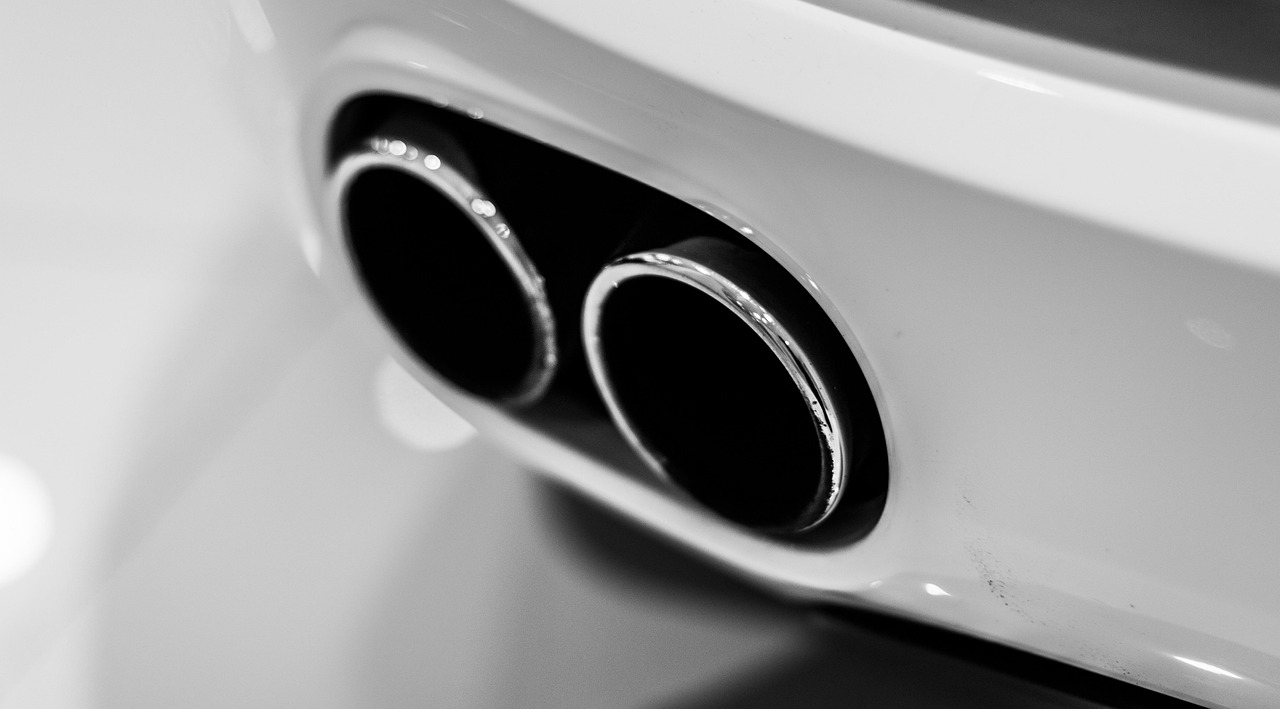
Exhaust inspection
Why the exhaust system matters
Why It Matters

Why the Exhaust System Matters

Your exhaust system does more than make your vehicle quieter. It plays an important role in safety, comfort, performance, emissions control, and overall vehicle reliability.

A properly working exhaust system helps:
  • Move exhaust gases away from the engine
  • Direct fumes safely away from the cabin
  • Reduce engine noise
  • Support proper engine performance
  • Help control emissions
  • Reduce underbody rattles and vibration
  • Protect nearby components from heat
  • Improve driving comfort
  • Reduce the risk of exhaust leaks
  • Help identify rust or corrosion concerns early
  • Support safer daily driving

If your exhaust system is leaking, loose, damaged, or heavily rusted, it should be inspected promptly.

The Components

Main Parts of the Exhaust System

Exhaust Manifold

The exhaust manifold collects exhaust gases from the engine cylinders and directs them into the exhaust system.

Why It Matters: A leaking exhaust manifold can cause ticking noises, exhaust smell, poor performance, and possible engine-related concerns.

Exhaust Pipes

Exhaust pipes carry gases from the engine area through the underside of the vehicle and out the rear.

Why They Matter: Rust, cracks, holes, or loose connections in the pipes can cause loud noise, fumes, and exhaust leaks.

Catalytic Converter

The catalytic converter helps reduce harmful emissions before exhaust gases leave the vehicle.

Why It Matters: A damaged, restricted, or leaking catalytic converter can affect performance, emissions, exhaust smell, and warning lights.

Oxygen Sensors

Oxygen sensors monitor the exhaust gases and help the engine computer manage fuel mixture and emissions performance.

Why They Matter: Faulty oxygen sensors can affect fuel economy, engine performance, and check engine light concerns.

Resonator

A resonator helps reduce certain exhaust sounds and smooth out exhaust tone.

Why It Matters: A damaged resonator can make the vehicle louder or change the sound of the exhaust.

Muffler

The muffler reduces engine noise before exhaust exits the vehicle.

Why It Matters: A damaged or rusted muffler can make the vehicle much louder and may allow exhaust leaks.

Learn More

Exhaust Hangers

Exhaust hangers support the exhaust system and hold it in place underneath the vehicle.

Why They Matter: Broken or worn hangers can allow the exhaust to sag, rattle, hit the vehicle body, or drag on the road.

Clamps and Flanges

Clamps and flanges connect exhaust sections together.

Why They Matter: Loose, rusted, or broken connections can cause leaks, rattling, or separated exhaust parts.

Gaskets and Seals

Gaskets seal exhaust connections and help prevent leaks.

Why They Matter: Failed gaskets can cause exhaust leaks, ticking noises, smell, and performance concerns.

Heat Shields

Heat shields protect nearby parts from high exhaust temperatures.

Why They Matter: Loose or rusted heat shields often cause rattling or buzzing sounds, especially when idling or accelerating.

Tailpipe

The tailpipe directs exhaust gases away from the vehicle.

Why It Matters: A damaged or misdirected tailpipe may allow fumes to collect near the vehicle or make the exhaust system noisier.

Warning Signs

Signs You May Need an Exhaust Inspection

You should schedule an exhaust inspection if you notice:

  • Vehicle sounds louder than usual
  • Rattling noise underneath
  • Buzzing sound when accelerating
  • Exhaust smell inside or around the vehicle
  • Hissing or ticking noise from the engine area
  • Reduced engine performance
  • Lower fuel efficiency
  • Check engine light is on
  • Muffler looks rusty or damaged
  • Exhaust pipe appears loose or hanging
  • Metal scraping sound underneath
  • Vehicle vibrates more than usual
  • Burning smell after driving
  • Tailpipe appears damaged
  • Rust flakes or holes are visible
  • Vehicle recently hit road debris, curb, or snowbank
  • Noise gets louder over time
  • You are preparing for winter or a long trip

Exhaust problems often start small but can become louder, more noticeable, and more serious over time.

What Goes Wrong

Common Exhaust Problems

Exhaust leak

Exhaust Leak

An exhaust leak happens when gases escape from the system before reaching the tailpipe.

Common Causes
  • Rust holes
  • Cracked pipe
  • Failed gasket
  • Loose flange
  • Broken weld
  • Damaged flex pipe
  • Exhaust manifold leak
  • Muffler corrosion
What You May Notice
  • Loud exhaust noise
  • Hissing sound
  • Ticking sound near engine
  • Exhaust smell
  • Reduced performance
  • Check engine light
  • Poor fuel economy

Why It Matters: Exhaust leaks should be checked because fumes may become a safety concern, and leaks can affect performance and emissions-related systems.

Rusted muffler

Rusted Muffler

The muffler is exposed to heat, moisture, salt, and road debris. Over time, rust can create holes or weaken the muffler body.

What You May Notice
  • Louder exhaust
  • Deep rumbling sound
  • Rust visible on muffler
  • Exhaust smell
  • Rattling from inside muffler
  • Holes or flakes on metal surface

Why It Matters: A damaged muffler can make the vehicle noisy and may allow exhaust leaks.

Loose heat shield

Loose Heat Shield

Heat shields are thin metal panels around hot exhaust parts. They can rust, loosen, or vibrate.

What You May Notice
  • Metallic rattling
  • Buzzing sound at certain speeds
  • Noise while idling
  • Noise during acceleration
  • Sound from underneath the vehicle

Why It Matters: Loose heat shields are common, but they should be secured or repaired before they fall off or continue vibrating.

Broken exhaust hanger

Broken Exhaust Hanger

Exhaust hangers hold the exhaust system in place. If a hanger breaks, the exhaust may sag or move too much.

What You May Notice
  • Exhaust pipe hanging low
  • Rattling underneath
  • Banging noise over bumps
  • Scraping sound
  • Exhaust movement
  • Muffler looks uneven

Why It Matters: A loose exhaust system can hit other parts, drag on the road, or become further damaged.

Damaged flex pipe

Damaged Flex Pipe

The flex pipe allows movement between the engine and exhaust system. It helps absorb vibration and engine movement.

What You May Notice
  • Loud exhaust near front of vehicle
  • Hissing noise
  • Exhaust smell
  • Vibration
  • Noise during acceleration
  • Check engine light in some cases

Why It Matters: A flex pipe leak can create noise, fumes, and performance concerns.

Catalytic converter concerns

Catalytic Converter Concerns

The catalytic converter helps reduce emissions. It can become damaged, restricted, overheated, or affected by engine problems.

What You May Notice
  • Check engine light
  • Reduced acceleration
  • Rotten egg smell
  • Excessive heat under vehicle
  • Rattling from converter area
  • Poor fuel economy
  • Failed emissions-related concerns

Why It Matters: Catalytic converter issues should be reviewed carefully because they may be caused by other engine problems and can affect vehicle performance.

Exhaust pipe damage

Exhaust Pipe Damage

Exhaust pipes can rust, crack, bend, or break from corrosion or impact.

What You May Notice
  • Loud exhaust
  • Exhaust leak smell
  • Hanging pipe
  • Scraping noise
  • Visible holes
  • Underbody vibration
  • Noise after hitting road debris

Why It Matters: Damaged pipes can allow exhaust gases to escape and may lead to further underbody problems.

Sound Clues

Exhaust Noise: What It Could Mean

01

Loud Rumbling Noise

A loud rumbling sound often points to a damaged muffler, exhaust pipe leak, or separated exhaust section.

02

Hissing Noise

A hissing sound may indicate a small exhaust leak, often from a pipe, gasket, flex pipe, or connection point.

03

Ticking Noise Near Engine

A ticking sound near the engine may be caused by an exhaust manifold leak, gasket issue, or engine-area exhaust leak.

04

Metallic Rattle

A metallic rattle often comes from a loose heat shield, broken hanger, loose clamp, or internal muffler/catalytic converter concern.

05

Buzzing During Acceleration

Buzzing may be caused by loose heat shields, exhaust vibration, broken brackets, or damaged exhaust components.

06

Banging Over Bumps

A banging sound may happen when the exhaust system is loose and hitting the vehicle body or suspension area.

Any new or worsening exhaust noise should be inspected.

Smell

Exhaust Smell: Why It Should Not Be Ignored

An exhaust smell inside or around the vehicle should be taken seriously. Exhaust gases should travel through the system and exit from the tailpipe, away from the passenger cabin.

Possible causes of exhaust smell include
  • Exhaust leak
  • Damaged exhaust pipe
  • Leaking flex pipe
  • Exhaust manifold leak
  • Faulty gasket
  • Tailpipe damage
  • Rear hatch or trunk seal issue
  • Poor exhaust routing
  • Idling in enclosed or poorly ventilated areas

If you smell exhaust inside the vehicle, avoid unnecessary driving and have the vehicle inspected promptly.

Safety

Exhaust Inspection and Carbon Monoxide Safety

Exhaust gases can contain carbon monoxide, which is dangerous because it is colourless and odourless. A properly working exhaust system helps direct gases away from the vehicle cabin.

Warning signs that may suggest fumes are entering the vehicle
  • Exhaust smell inside cabin
  • Headache while driving
  • Dizziness or nausea while in vehicle
  • Smell becomes stronger when stopped
  • Smell increases when heater or vents are on
  • Exhaust noise near front or underbody

If you suspect exhaust fumes are entering the cabin, stop driving safely and have the vehicle inspected as soon as possible.

Know the Difference

Exhaust Inspection vs. Related Services

Exhaust Inspection vs. Undercarriage Inspection

An exhaust inspection focuses specifically on the exhaust system. An undercarriage inspection is broader and may include the exhaust system, fluid leaks, rust and corrosion, brake lines, fuel lines, splash shields, underbody covers, frame and subframe areas, and visible drivetrain components.

Exhaust Focus

Choose an Exhaust Inspection If

Your main concern is loud exhaust, fumes, muffler rust, or rattling from exhaust parts.

Whole Underside

Choose an Undercarriage Inspection If

You are concerned about the entire underside of the vehicle.

Exhaust Inspection vs. Engine Diagnostics

Some exhaust-related issues may trigger a check engine light, especially if oxygen sensors or the catalytic converter are involved.

Visual

Exhaust Inspection

This checks visible exhaust parts for leaks, rust, broken hangers, loose shields, damaged pipes, and underbody concerns.

Electronic

Engine Diagnostics

This reviews engine computer codes, sensor data, misfires, emissions-related faults, and engine performance concerns.

Important Point

If the check engine light is on, an exhaust inspection may be helpful, but engine diagnostics may also be needed to identify the exact cause.

Exhaust Inspection vs. Noise & Vibration Diagnosis

A noise and vibration diagnosis is broader than an exhaust inspection.

Exhaust

Exhaust Inspection Is Best For

  • Loud exhaust
  • Rattling underneath
  • Exhaust smell
  • Muffler damage
  • Heat shield noise
  • Broken hanger
  • Visible exhaust rust
Broader

Noise & Vibration Diagnosis Is Best For

  • Unknown clunking
  • Steering vibration
  • Humming while driving
  • Grinding
  • Shaking at highway speeds
  • Noise that may come from tires, brakes, suspension, or drivetrain

If the noise source is unclear, a broader noise and vibration diagnosis may be recommended.

Noise & Vibration Diagnosis

Exhaust Inspection vs. Muffler Replacement

A muffler replacement is only one possible repair. An exhaust inspection helps determine whether the muffler is actually the problem.

Muffler

Muffler Replacement May Be Needed If

  • Muffler has holes
  • Muffler is severely rusted
  • Internal muffler parts are rattling
  • Muffler has separated from piping
  • Exhaust noise is coming from muffler area
Other Repairs

Other Possible Exhaust Repairs May Involve

  • Exhaust pipe
  • Flex pipe
  • Gasket
  • Clamp
  • Hanger
  • Heat shield
  • Flange
  • Catalytic converter
  • Exhaust manifold

A proper inspection helps avoid replacing the wrong part.

What Wears It Out

Exhaust Systems, Rust, Impact and Local Roads

Exhaust rust

Exhaust Inspection and Rust

Rust is one of the most common exhaust system problems, especially in Ontario. Exhaust systems experience heat from inside and moisture from outside. Winter road salt can speed up corrosion. Rust commonly affects:

  • Mufflers
  • Tailpipes
  • Exhaust pipes
  • Clamps
  • Hangers
  • Flanges
  • Heat shields
  • Catalytic converter connections
  • Welded joints

Surface Rust: Light rust may be normal on some exhaust parts and may not require immediate repair. Severe Rust: Severe rust can create holes, weak connections, broken brackets, leaks, or exhaust separation. A visual inspection helps determine whether rust is cosmetic, moderate, or a more serious concern.

Exhaust damage from road debris

After Hitting Road Debris

Road debris, snowbanks, potholes, parking blocks, and curbs can damage the exhaust system. After an impact, schedule an inspection if you notice:

  • Exhaust suddenly sounds louder
  • Pipe looks bent or hanging
  • Scraping underneath
  • Rattling noise
  • Exhaust smell
  • Muffler shifted position
  • Heat shield hanging
  • Vehicle vibration
  • Check engine light appears
  • Fluid leak along with exhaust damage

Even if the vehicle still drives, underbody impact can weaken exhaust mounts or create leaks.

Scarborough and GTA conditions

Scarborough and GTA Conditions

Scarborough and GTA driving conditions can be hard on exhaust systems. Vehicles are exposed to winter salt, snow, slush, potholes, stop-and-go traffic, construction debris, and moisture. Local conditions that affect exhaust systems include:

  • Road salt corrosion
  • Snow and slush buildup
  • Potholes and road impact
  • Speed bumps
  • Short trips that trap moisture
  • Stop-and-go traffic
  • Construction debris
  • Seasonal temperature changes
  • Highway commuting
  • Moisture and freeze-thaw cycles

Regular exhaust inspections are especially valuable for vehicles driven year-round in Ontario.

Short trips and exhaust rust

Short Trips and Exhaust System Rust

Short trips can contribute to exhaust rust because the exhaust system may not get hot enough for long enough to evaporate moisture inside the pipes and muffler. This can lead to:

  • Internal rust
  • Muffler corrosion
  • Tailpipe rust
  • Water dripping from exhaust
  • Faster exhaust wear
  • Increased noise over time

Drivers who mostly take short local trips should pay attention to exhaust noise and rust concerns.

Good Timing

When an Exhaust Inspection Helps Most

Before Winter

Before winter, it is smart to inspect the exhaust system because road salt, snow, ice, and cold weather can make existing problems worse. A pre-winter exhaust inspection may include:

  • Muffler condition
  • Exhaust pipe rust
  • Hanger condition
  • Heat shield security
  • Visible leak signs
  • Tailpipe condition
  • Exhaust smell concerns
  • Underbody corrosion review

A secure exhaust system is especially important before winter road conditions arrive.

After Winter

After winter, the exhaust system should be checked for salt-related rust and damage. A post-winter exhaust inspection may help identify:

  • New rust spots
  • Loose heat shields
  • Broken exhaust hangers
  • Muffler corrosion
  • Pipe damage
  • Exhaust leaks
  • Road debris damage
  • Underbody vibration concerns

Winter conditions can turn minor corrosion into larger exhaust problems.

Before a Long Trip

Before a long drive, cottage trip, family visit, business commute, or highway travel, exhaust concerns should be checked. A pre-trip exhaust inspection can help identify:

  • Loose exhaust components
  • Muffler damage
  • Exhaust leaks
  • Heat shield rattles
  • Broken hangers
  • Rusted pipes
  • Catalytic converter concerns
  • Tailpipe damage

A quiet and secure exhaust system improves comfort and confidence during longer drives.

Older and High-Mileage Vehicles

Older and high-mileage vehicles are more likely to develop exhaust problems due to rust, heat cycles, worn hangers, old gaskets, corroded pipes, and loose heat shields. An exhaust inspection is especially useful if:

  • Vehicle has high mileage
  • Exhaust has never been replaced
  • Vehicle sounds louder than before
  • Muffler looks rusty
  • Rattling is present
  • Exhaust smell is noticeable
  • Vehicle was recently purchased used
  • Vehicle is driven year-round in Ontario
  • Short trips are common
  • Check engine light is on

Regular inspection helps keep older vehicles quieter, safer, and more reliable.

Act Quickly

When Exhaust Service May Be Urgent

Some exhaust concerns should be checked immediately. Seek service quickly if:

  • Exhaust smell enters the cabin
  • Vehicle suddenly becomes very loud
  • Exhaust pipe is dragging
  • Muffler is hanging
  • Rattling becomes severe
  • You feel dizzy, nauseous, or get headaches while driving
  • Check engine light flashes
  • Exhaust leak is near the front of the vehicle
  • Tailpipe is damaged or blocked
  • Vehicle was hit underneath
  • You hear loud hissing or ticking near the engine

Exhaust fumes and underbody damage should not be ignored.

Safety First

Can You Drive With an Exhaust Leak?

It depends on the location and severity of the leak. A small rear exhaust leak may not immediately stop the vehicle from driving, but any exhaust leak should be inspected. A leak near the front or middle of the vehicle may be more concerning because fumes can potentially enter the cabin.

You should avoid driving if:
  • Exhaust smell is inside the vehicle
  • Exhaust is extremely loud
  • Exhaust pipe is hanging or dragging
  • You feel unwell while driving
  • Leak is near the engine or cabin area
  • Vehicle has reduced power
  • Check engine light is flashing
  • Vehicle recently hit road debris and now sounds different

When in doubt, have the vehicle inspected before continuing to drive.

The Cost of Waiting

What Happens If You Ignore Exhaust Problems?

Ignoring exhaust problems can lead to:

  • Louder vehicle noise
  • Exhaust fumes near or inside the vehicle
  • Reduced fuel efficiency
  • Reduced engine performance
  • Check engine light concerns
  • Failed emissions-related components
  • Heat shield rattles getting worse
  • Broken hangers or dragging exhaust
  • More expensive repairs later
  • Rust spreading through the system
  • Safety concerns from exhaust leaks
  • Damage to nearby underbody components

Exhaust problems often worsen over time, especially in vehicles exposed to salt and moisture.

What We Do

What Is Included in Our Exhaust Inspection Service?

At Valvoline Express Care Scarborough, an exhaust inspection may include:

Exhaust Pipe Review

We inspect visible exhaust pipes for rust, holes, cracks, damage, or loose connections.

Muffler Review

We check the visible muffler area for corrosion, holes, rattling, or damage.

Hanger and Mount Review

We inspect visible hangers and mounts to see whether the exhaust system is properly supported.

Heat Shield Review

We look for loose, rusted, or rattling heat shields.

Catalytic Converter Area Awareness

Where visible, we check for obvious damage, rattling, or rust around the converter area.

Flex Pipe Review

We look for visible flex pipe damage, cracking, or leak symptoms where accessible.

Clamp and Flange Review

We inspect visible clamps, flanges, and joints for rust, looseness, or leak signs.

Exhaust Leak Awareness

We look for visible signs of exhaust leaks, soot marks, holes, broken joints, or loud noise sources.

Tailpipe Review

We inspect the visible tailpipe for damage, rust, blockage, or poor positioning.

Underbody Noise Review

If rattling, buzzing, scraping, or banging is reported, we check visible exhaust-related areas.

Clear Recommendation

If a concern is found, we explain the issue and recommend the appropriate next step.

How It Works

Our Exhaust Inspection Process

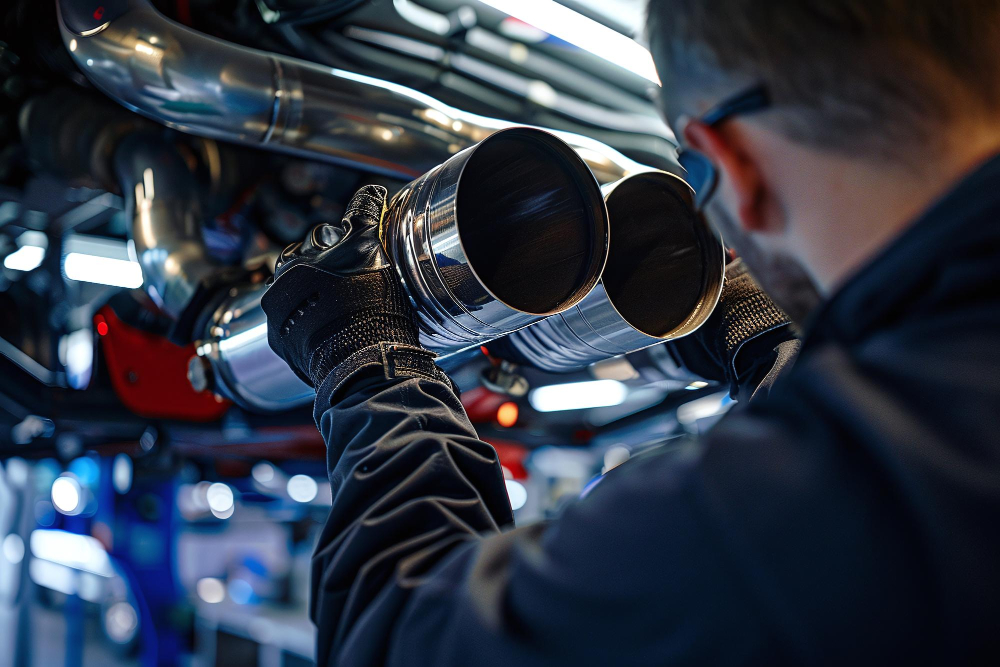
Exhaust inspection in progress

We ask what you noticed, such as loud exhaust, rattling, smell, reduced performance, scraping, or check engine light.

We review when the issue happens: while idling, accelerating, driving over bumps, starting cold, or after hitting road debris.

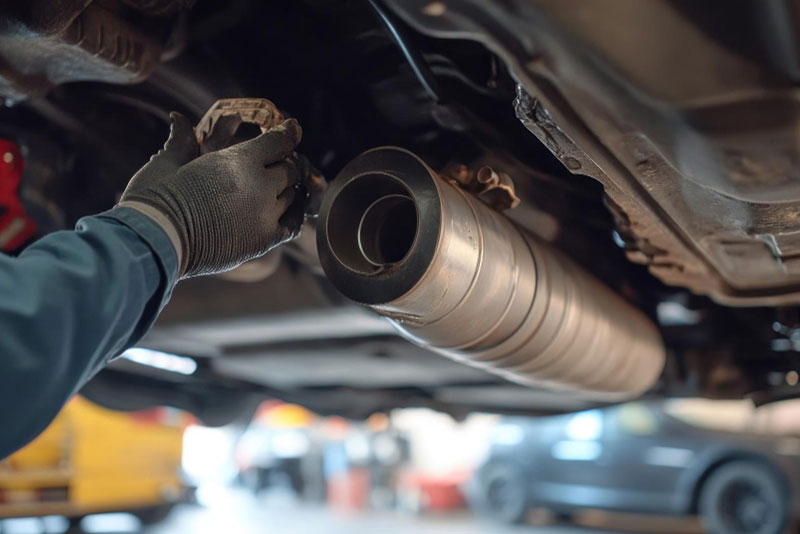
We inspect visible exhaust components underneath the vehicle.

If there is a rattle, buzz, or loud sound, we inspect heat shields, hangers, muffler, pipes, and visible joints.

We look for holes, cracks, soot marks, rusted seams, loose flanges, and corrosion.

If exhaust smell or fumes are reported, we treat the concern seriously and recommend the proper next step.

We explain what we found in simple, practical language.

If service is needed, we recommend the next step, such as muffler repair, pipe repair, hanger replacement, heat shield service, gasket repair, catalytic converter review, or further diagnostics.

Before You Arrive

What Customers Should Notice Before Coming In

Before your appointment, it helps to notice:

  • Is the vehicle louder than usual?
  • Is the sound coming from the front, middle, or rear?
  • Do you smell exhaust inside the vehicle?
  • Does the sound happen when accelerating?
  • Do you hear rattling while idling?
  • Does the noise happen over bumps?
  • Did you recently hit road debris or a snowbank?
  • Is the muffler or pipe hanging low?
  • Is there a check engine light?
  • Has fuel efficiency changed?
  • Does the vehicle feel weaker than usual?
  • Is there visible rust under the vehicle?
  • Does the noise get worse when the engine is cold?

You do not need to diagnose the issue yourself. These details help guide the inspection.

Driver Tips

Exhaust Maintenance Tips for Drivers

To help protect your exhaust system:

  • Do not ignore new exhaust noises
  • Check rattling sounds early
  • Avoid driving over road debris
  • Be careful around snowbanks and curbs
  • Wash underbody after winter when possible
  • Inspect exhaust after harsh winter driving
  • Address exhaust smell immediately
  • Replace broken hangers before pipes sag
  • Check heat shield rattles before they worsen
  • Do not ignore check engine lights
  • Avoid repeated short trips when possible
  • Inspect before long trips
  • Inspect older vehicles regularly
  • Address rust before parts separate or leak

Good exhaust maintenance helps protect comfort, safety, and long-term vehicle reliability.

Key Benefits

Benefits of a Professional Exhaust Inspection

Quieter Driving

An inspection can identify muffler, pipe, and hanger concerns that cause loud exhaust noise.

Better Safety

Exhaust leaks and fumes should be checked promptly to protect passengers.

Reduced Rattles

Loose heat shields, hangers, and clamps can be identified and repaired.

Early Rust Detection

Rust can be reviewed before it causes holes, leaks, or broken parts.

Better Vehicle Performance Awareness

Exhaust restrictions or leaks may affect engine performance and fuel efficiency.

Better Long-Term Reliability

Finding exhaust problems early can prevent larger underbody repairs.

Peace of Mind

You understand the condition of your exhaust system and what needs attention.

Local & Trusted

Why Choose Valvoline Express Care Scarborough for Exhaust Inspection?

Valvoline Express Care service bay

Practical Underbody Review

We inspect visible exhaust components and help identify common exhaust system concerns.

Clear Communication

We explain exhaust leaks, rust, rattles, and muffler concerns in simple language.

Honest Recommendations

We recommend service based on visible condition, symptoms, and safety needs.

Local Scarborough Auto Care

We understand how Ontario road salt, snow, slush, potholes, traffic, and seasonal changes affect exhaust systems.

Complete Undercarriage Support

We can also help with fluid leak checks, rust and corrosion review, splash shield concerns, underbody noise, oil changes, brakes, tires, suspension, lights, wipers, and general maintenance.

Undercarriage
Ready When You Are

Book Your Exhaust Inspection Today

We inspect your exhaust system and provide clear, honest recommendations for safer driving, quieter performance, and better vehicle health.